Storm Watching in Cornwall: Where to go and how to do it safely

Storm watching in Cornwall: where to go and how to do it safely
There is a moment, usually somewhere between autumn and early spring, when Cornwall feels completely transformed. The beaches empty, the skies grow bigger and Atlantic weather begins to move across the coast. On the right day, waves roll towards the cliffs in great white lines, rain moves across the horizon and familiar stretches of coastline take on an altogether wilder character.
Storm watching is one of the most memorable ways to experience Cornwall outside summer. But the best storm watching is not about getting as close to the sea as possible. It is about finding somewhere safe, settling in and watching the weather unfold from a distance.
From Porthleven and Sennen to Godrevy, St Agnes and The Lizard, here are some of our favourite places to experience Cornwall at its most dramatic, along with what to know before heading out.
Why Cornwall is so good for storm watching
Cornwall reaches out into the Atlantic, with long stretches of north and west-facing coastline exposed to weather moving in from the ocean. Through autumn and winter, changing skies, bigger Atlantic swells and quieter coastlines create a very different atmosphere from the Cornwall of summer.
It is not only about enormous waves. Some of the most memorable days come with fast-moving clouds, shafts of sunlight over the sea, rain sweeping across a bay or the colour that appears just after a storm has passed.
And you do not necessarily need to spend hours outside to enjoy it. A sea-view café, a sheltered viewpoint or a window overlooking the coast can give you just as much of a sense of the weather without putting yourself in its path.
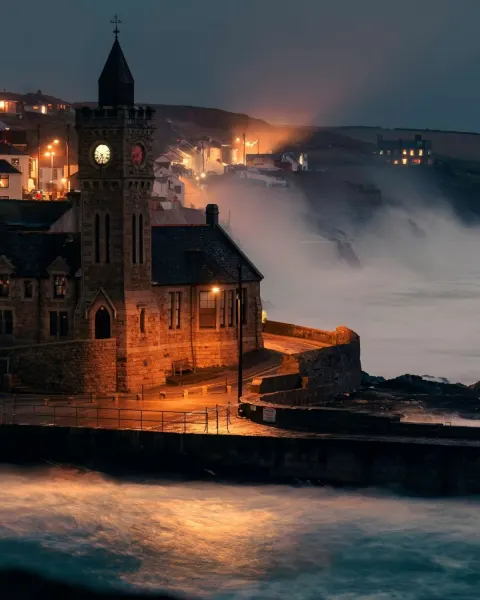
1. Porthleven
Few places are as closely associated with Cornwall's winter storms as Porthleven. When Atlantic weather reaches the south-west coast, the harbour and surrounding coastline can become extraordinarily dramatic, with waves breaking beyond the harbour and spray rising above the sea.
This is also somewhere to be particularly cautious. Do not approach harbour walls, sea defences or exposed rocks in rough conditions. Watch from a properly sheltered location well away from the water, then make the most of Porthleven's restaurants, cafés and pubs once you have had your fill of the weather.
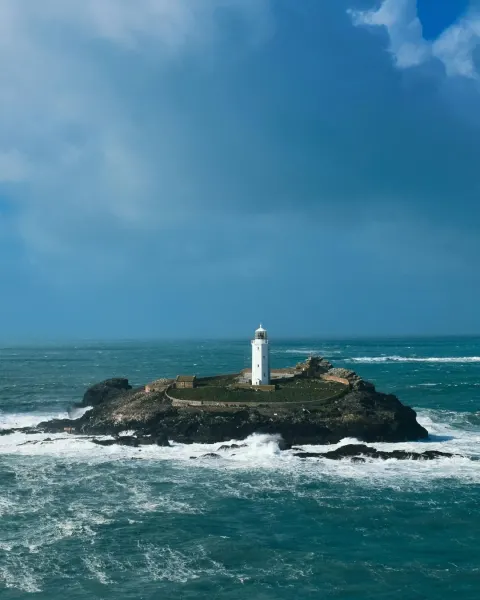
2. Godrevy and Gwithian
The coastline around Godrevy and Gwithian gives you a much wider view of the weather. From safe, recognised viewpoints inland from the cliff edge, you can watch Atlantic swells move towards the long sweep of St Ives Bay, with Godrevy Lighthouse sitting offshore.
It is particularly beautiful when a weather front is beginning to clear and patches of light start breaking through the clouds. Keep well back from exposed edges and avoid heading down onto beaches when large waves or high tides are forecast.
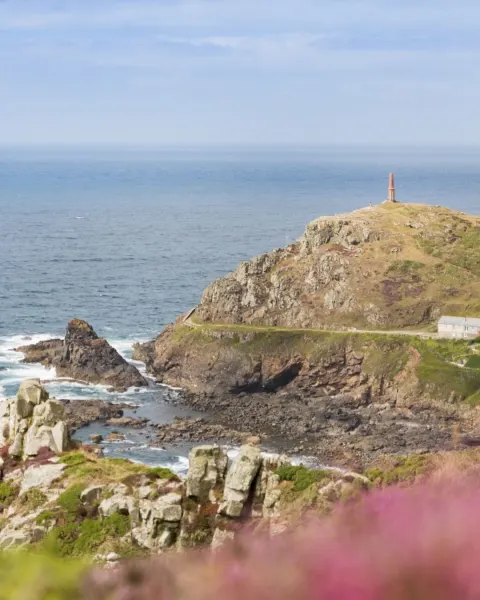
3. Sennen and Cape Cornwall
For a real sense of Cornwall meeting the Atlantic, head west towards Sennen, St Just and Cape Cornwall. This is some of the county's most exposed coastline, with broad horizons and a landscape that feels especially elemental in winter.
Rather than heading towards the shoreline during rough seas, choose elevated recognised viewpoints well back from cliff edges. Cape Cornwall and the wider Penwith coast can be spectacular, but conditions here can change quickly, so the forecast should always shape the plan.
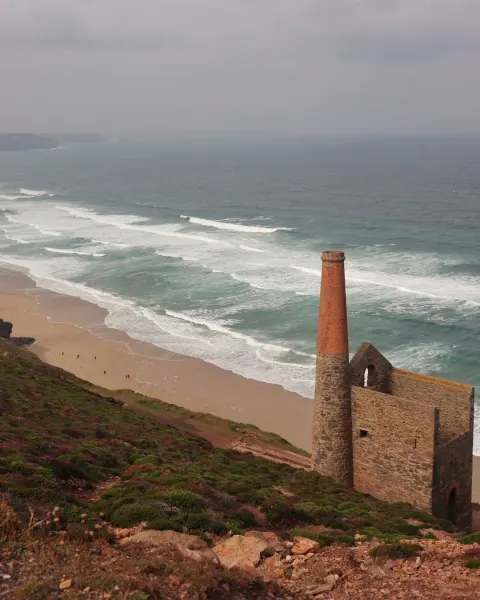
4. St Agnes and Porthtowan
The north coast around St Agnes, Trevaunance Cove and nearby Porthtowan combines Atlantic surf, steep cliffs and huge skies.
In winter, this stretch of coast can feel wonderfully elemental. Watch from safe viewpoints above the coast when conditions allow, then head back into St Agnes or Porthtowan for a long lunch or something warm. It is a particularly good area for combining dramatic weather with village life and slower winter days.
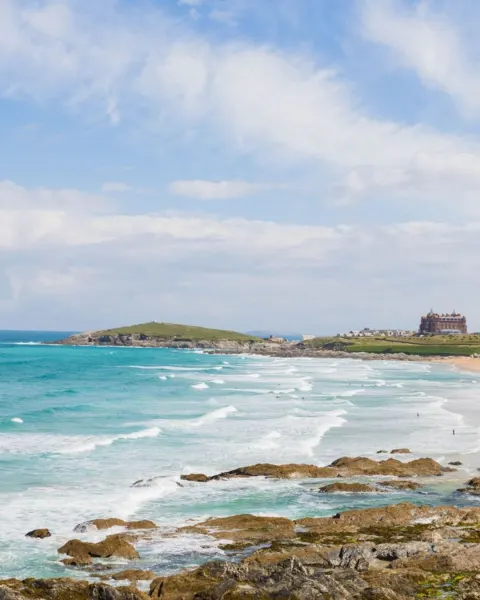
5. Fistral and Newquay
If you want to see the Atlantic moving in across a broad sweep of coast, Fistral Beach and Newquay are hard to beat. Winter surf can be spectacular, particularly when viewed from higher ground or from one of the buildings overlooking the bay.
Newquay also gives you plenty of places to retreat indoors, so you can experience the drama without committing to a long exposed walk. Keep off the shoreline in large swells and remember that the sea can travel much further up a beach than it first appears.
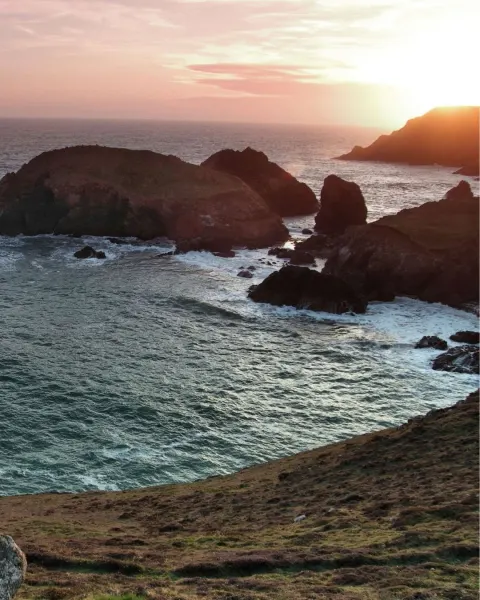
6. The Lizard Peninsula
There is something particularly atmospheric about The Lizard in winter. Headlands, open skies and rugged coastline make the peninsula feel wonderfully remote when the weather moves in.
Rather than seeking out the most exposed point during a storm, enjoy the landscape from recognised paths and sheltered viewpoints when conditions allow. Cadgwith, Mullion, Coverack and the coastline around Lizard Point all offer different perspectives on this wild corner of Cornwall.
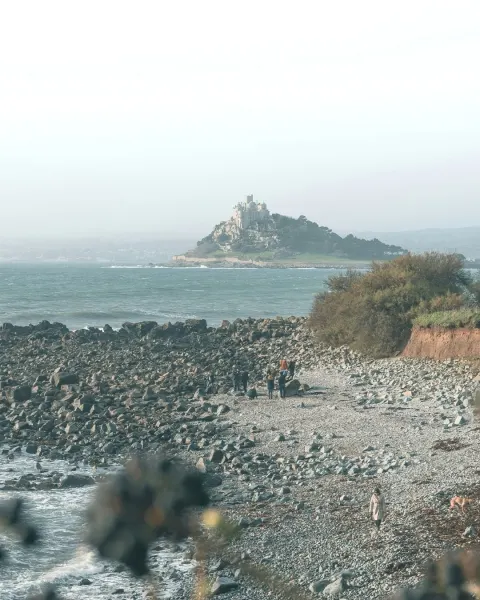
7. Mount's Bay
Storm watching does not always have to mean standing above crashing Atlantic cliffs. Mount's Bay, stretching around Penzance and Marazion, offers huge skies and expansive views across the water.
Watch showers track across the bay, see St Michael's Mount disappear into mist and reappear again, or simply find a window overlooking the sea and settle in. For a gentler introduction to Cornwall's winter weather, it can be a particularly lovely choice.
When is the best time for storm watching in Cornwall?
Storm watching is most associated with autumn, winter and early spring, when unsettled Atlantic weather is more common and Cornwall's coastline is considerably quieter.
That does not mean planning a trip around the most severe weather warning you can find. Some of the most memorable conditions come around the edges of a weather system, when clouds are moving quickly, waves are still rolling in and light begins breaking through after the rain.
Keep plans flexible and let the forecast shape the day rather than trying to stick rigidly to an itinerary.
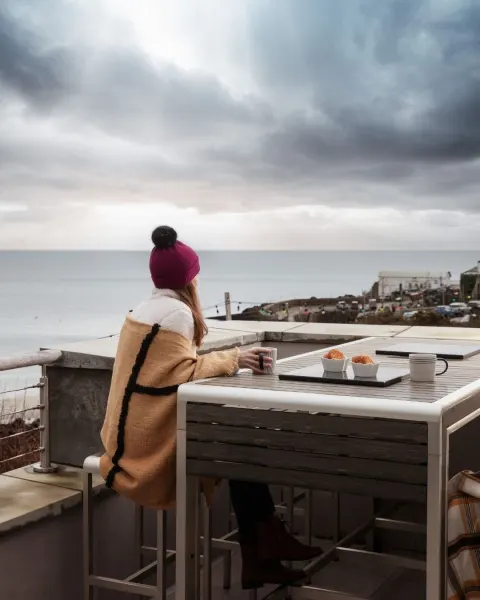
How to storm watch safely in Cornwall
This is the most important part. Large waves can travel much further inland than they first appear, including across beaches, sea fronts and harbour walls. Conditions can also change quickly around exposed headlands and cliff tops.
- Stay well back from the sea and never stand on harbour walls, exposed rocks or sea defences during rough conditions.
- Keep away from cliff edges and unstable ground.
- Check the weather forecast, weather warnings and tide times before setting out.
- Follow local closures, signs and Coast Path diversions.
- Wear warm waterproof layers and footwear with good grip.
- Keep children and dogs close.
- If the weather feels unsafe, stay indoors.
The Met Office and South West Coast Path both provide useful safety guidance. If someone gets into difficulty at the coast, call 999 and ask for the Coastguard.
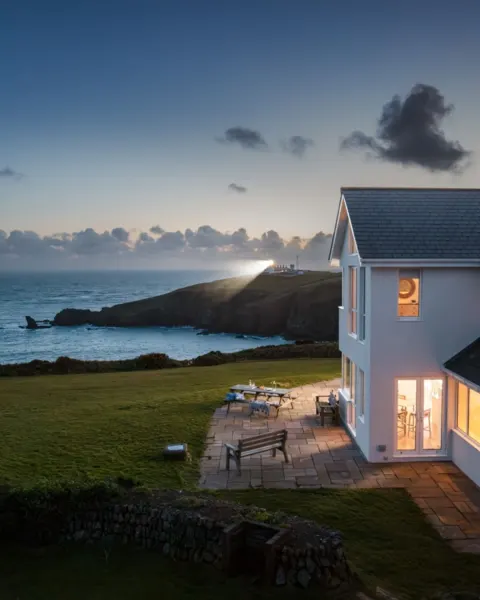
Sometimes the best viewpoint is your window
There is another way to storm watch in Cornwall, and it may be our favourite. Wake slowly. Make coffee. Pull a chair towards the window and watch the weather arrive without putting your coat on at all.
A coastal home with wide sea views gives you the theatre of the storm without needing to chase it. Rain moves across the glass, the horizon disappears and reappears, and the sea changes almost by the minute.
Our Storm Watching Escapes bring together homes with panoramic windows, elevated coastal settings and interiors made for slower autumn and winter days.
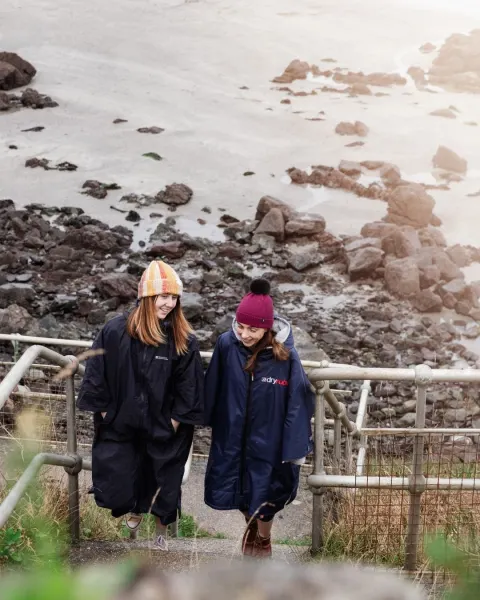
What to do after the storm
Some of Cornwall's best winter moments happen once the worst of the weather has moved through. The clouds begin to lift, light catches the water and suddenly there is a window for a walk before the next shower arrives.
That is the beauty of a winter stay here. A morning watching the Atlantic can turn into an afternoon on the coast path, followed by a long lunch, a pub stop or a quiet evening back at your Gem.
The weather does not have to interrupt the holiday. Often, it becomes one of the things you remember most.
Storm watching in Cornwall FAQs
Where is the best place to storm watch in Cornwall?
Porthleven, Godrevy, Sennen, Cape Cornwall, St Agnes, Porthtowan, Fistral Beach, The Lizard and Mount's Bay all offer dramatic coastal scenery. The safest viewpoint will always depend on the conditions on the day, so choose recognised viewpoints well away from the shoreline and exposed cliff edges.
What time of year is best for storm watching in Cornwall?
Autumn, winter and early spring are the main storm-watching seasons, when Atlantic weather can bring larger seas, fast-changing skies and some of Cornwall's most atmospheric coastal conditions.
Is it safe to watch storms in Cornwall?
It can be, provided you keep a safe distance from the sea and follow weather warnings and local advice. Never stand on harbour walls, sea defences, exposed rocks or close to cliff edges during severe weather, and change your plans if conditions deteriorate.
Where can I storm watch without being outside?
Sea-view cafés, restaurants and holiday homes are often some of the safest and most enjoyable places to watch winter weather. Our Storm Watching collection includes coastal homes chosen for sea views, panoramic windows and elevated settings.
What should I pack for a storm-watching break?
Bring waterproof outer layers, warm clothing and sturdy shoes with good grip. If you plan to walk, check the forecast before setting out and be prepared to change plans if the weather deteriorates.
Planning a winter break in Cornwall?
Storm watching is just one way to experience Cornwall outside the summer months. Explore our winter breaks in Cornwall for coast walks, quieter beaches, long lunches and slower days, or discover our handpicked Storm Watching Escapes for homes that put Cornwall's changing skies and sea views centre stage.
Related Posts

Cornwall in Winter: Walks, Food & Things to Do
Discover Cornwall in winter, when quieter beaches, wild coastal walks, dramatic skies and long lunches create a slower, more atmospheric way to experience the coast.

Autumn in Cornwall
Quieter beaches, wild coastal walks, changing landscapes and long lunches worth lingering over. Discover some of our favourite ways to experience Cornwall as summer gives way to autumn.

A Romantic Guide to Cornwall: Places to Stay, Eat & Explore
Slow mornings by the sea, long lunches, wild coastal walks and somewhere beautiful to return to. Discover our guide to romantic Cornwall, with places to stay, eat and explore together in every season.