Introducing The Cutmadoc Estate

Introducing The Cutmadoc Estate
Some places are made for getting away. Others are made for coming together.
Set within the historic landscape of Lanhydrock, The Cutmadoc Estate is a private two-home estate created for multigenerational stays, celebration weekends and nature-led escapes.
The estate brings together Little Cutmadoc Farm and Lykke, two beautifully distinct homes sat side by side within 12 acres of gardens, woodland and countryside, creating a secluded setting with plenty of space to gather, explore and simply be.
It’s a place designed around togetherness, without asking everyone to do the same thing. Children can disappear into the gardens, teenagers can head off on bikes, early risers can take a quiet coffee beside the lake, while everyone can come back together around a long dining table at the end of the day.
Whether you’re gathering three generations under one roof, marking a milestone or simply looking for somewhere to properly switch off, The Cutmadoc Estate offers a different kind of Cornish escape: private, peaceful and deeply connected to its surroundings.
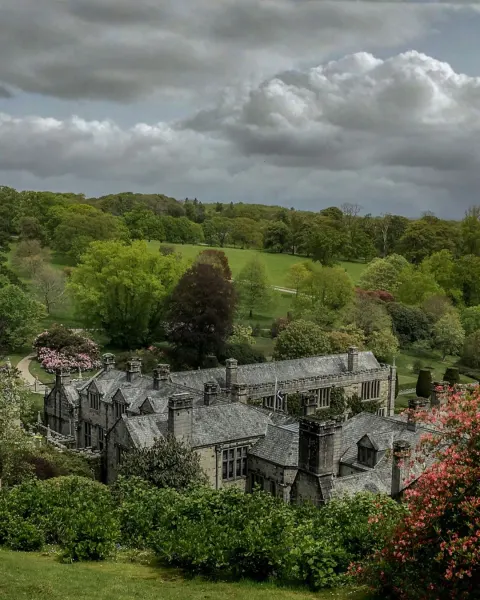
The location of The Cutmadoc Estate
Just beyond The Cutmadoc Estate, Lanhydrock offers one of Cornwall’s most impressive combinations of heritage and outdoor adventure. Explore the National Trust house and gardens, follow woodland trails or head out on two wheels through the surrounding countryside.
The setting also has a fascinating history of its own.
1530s – Monastic origins
Before the 1530s, the Lanhydrock estate was owned by the Augustinian Priory of St Petroc at Bodmin. Following the Dissolution of the Monasteries, the land passed into private ownership.
1620 – The Robartes family
Wealthy Truro merchant Sir Richard Robartes purchased the estate and began constructing a Jacobean mansion. Lanhydrock House was completed by his son, John Robartes, who later became the 1st Earl of Radnor.
1644 – The English Civil War
During the Civil War, John Robartes, a Parliamentarian, used Lanhydrock as his command post. Lanhydrock Estate was subsequently captured by Royalist forces under Sir Richard Grenville and briefly forfeited to the Crown.
1881 – The devastating fire
A major fire destroyed much of Lanhydrock House, including the south wing and central sections. Parts of the original 17th-century house survived, including the gatehouse, porch and spectacular 116-foot Long Gallery.
1881–1885 – Victorian rebuilding
Thomas Agar-Robartes commissioned an extensive rebuilding programme, working with architect Richard Coad to create the High Victorian country house seen at Lanhydrock today, while retaining surviving elements of the historic building.
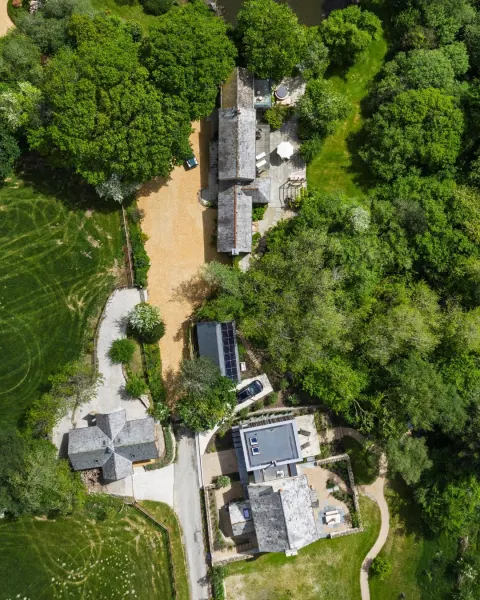
The history of The Cutmadoc Estate
The story of Cutmadoc reaches back much further than its recent transformation.
The wider Cutmadoc farmstead is first documented in 1302, suggesting a medieval farming site existed here by that time. By the late Victorian period, Little Cutmadoc Farm was already established, with historic mapping from between 1881 and 1907 showing the farm, its lane and a small quarry used to provide material for improvements to the track.
The farmhouse now known as Lykke is thought to have been built around the time Lanhydrock House itself was rebuilt following the 1881 fire. Its role was closely connected to the wider estate, providing a home for one of the farmers supplying produce to the main house.
Today, those historic connections remain part of what makes Cutmadoc so special. The original buildings, local stone, timber structures and surrounding landscape have been carefully restored and reimagined, creating homes that feel connected to their past without being confined by it.
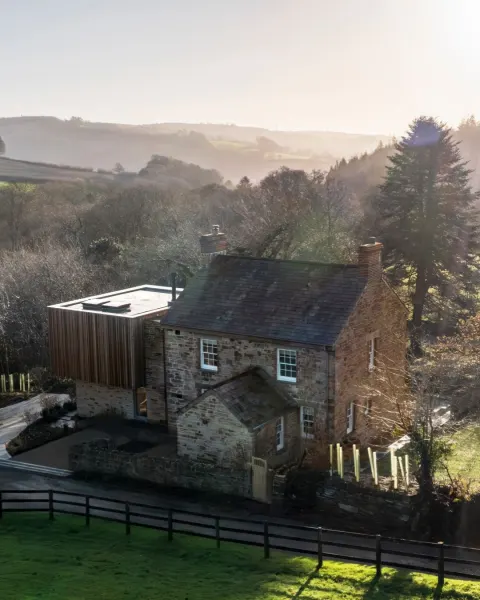
A note from the owner
The restoration of Cutmadoc has been a long-term labour of love.
The owners first bought Little Cutmadoc Farm in 2007, when the previous owners had already converted two stone barns into a home. Lykke, meanwhile, stood empty and derelict and gradually fell further into disrepair.
Over the years, the owners have carefully transformed both properties, always with the same vision: to create peaceful, calm homes surrounded by nature, while retaining as much of the original character and craftsmanship as possible.
At Little Cutmadoc Farm, a contemporary cedar-clad extension was introduced to open up views across the lake and gardens. Large areas of glass bring the landscape into the living spaces, while the original stone and timber structures remain central to the character of the house.
Lykke has undergone an equally considered restoration, bringing a long-derelict farmhouse back to life while introducing a contemporary cedar extension that sits naturally alongside the original stone building.
Natural stone, oak and other sustainable materials create a quiet backdrop for the surrounding landscape. From the panoramic views across trees, fields and water to the original stonework and carefully retained architectural details, the houses are designed to feel immersed in their setting.
The connection to nature extends beyond what guests can see. Lykke was once inhabited by bats during its years of dereliction, and its restoration included the creation of dedicated summer and winter roosts for six different species.
Around the houses, traditional Cornish hedging, natural hedge-laying techniques and wildlife-friendly planting have helped strengthen the relationship between the gardens and the wider countryside.
Deer can often be spotted in the gardens and surrounding paddocks, while the lake and woodland provide habitats for a wide range of birdlife.
And then there is the quiet.
As the farm track winds down towards the houses, the noise and pace of everyday life begin to disappear. At night, the estate becomes wonderfully still, with clear skies offering the chance to look up and see the stars.
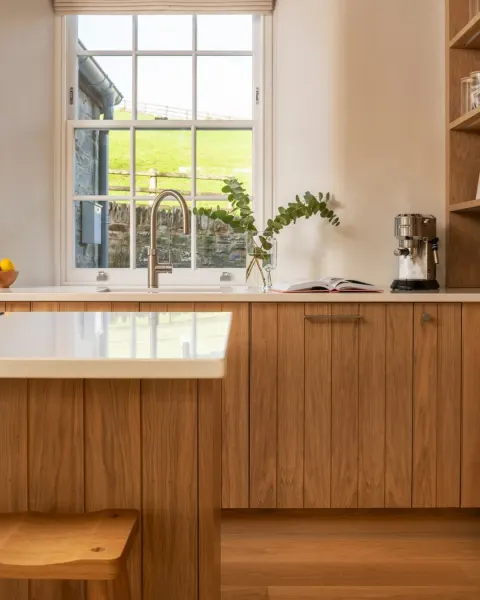
A note from Perring Properties
The restoration of Lykke was a project rooted in both architecture and conservation.
Perring Properties first worked at Little Cutmadoc Farm in 2019, delivering an extension and full kitchen upgrade. During those visits, Lykke was still derelict and almost entirely hidden beneath dense trees and vegetation.
Once the site was cleared, its potential became clear. Beautifully proportioned rooms, well-laid stone walls and impressively high ceilings provided a strong foundation, while years of neglect had left significant structural damage.
Working alongside Angus Webster Architects, the restoration brought together traditional craftsmanship and contemporary design. Original room proportions were retained, environmentally friendly insulation and lime were used throughout, and the existing Delabole slate roofs were preserved.
Inside, original floorboards were carefully sanded and re-oiled. Where existing Delabole slate flooring could not be reused inside, it was repurposed externally, giving the material another life within the property.
The result is a restoration that feels considered rather than overworked: a home that celebrates what was already there while giving it a new purpose.
A note from Millard & Flo Interiors
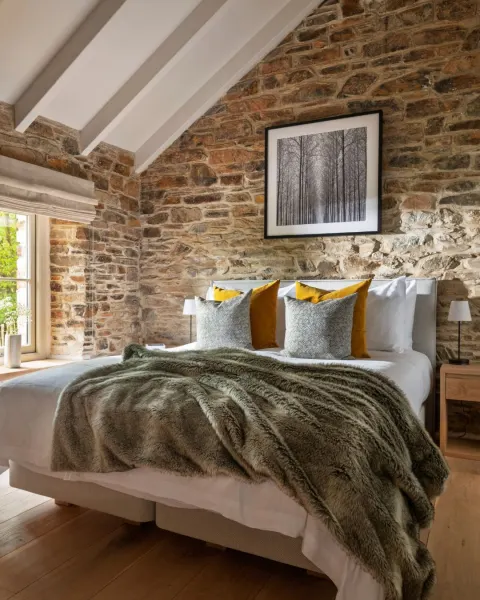
Inside both homes, the approach was simple: celebrate what was already there, then create spaces that feel comfortable, calm and quietly luxurious.
The interiors respond to the unique woodland setting and the character of the original buildings, while bringing cohesion to the traditional architecture and contemporary extensions.
Original stone walls, farmhouse fireplaces, alcoves and timber beams sit alongside lime-rendered walls, wide oak floorboards, natural linens and custom-designed, locally made cabinetry and furniture.
The palette is deliberately natural, allowing the surrounding landscape to take centre stage. Large areas of glass draw views of trees, fields and water deep into the houses, while softer textures and warm materials make the spaces feel inviting when the weather turns.
The result is an interior that doesn't compete with the architecture or the landscape. It simply gives both room to breathe.
A note from Darren Hawkes Gardening
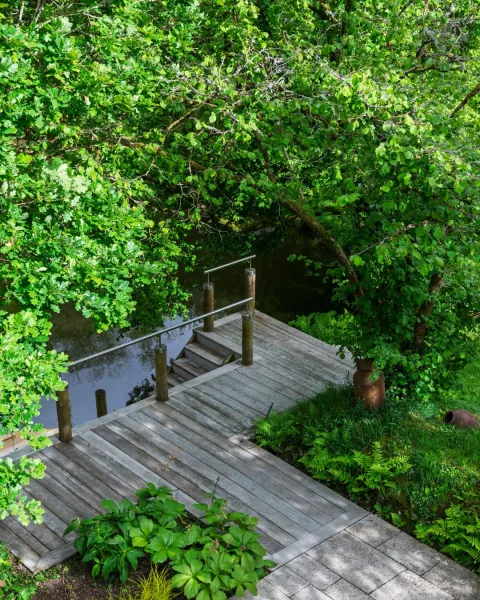
The gardens at Cutmadoc have been designed to feel as though they belong to the landscape rather than sit apart from it.
Set within a natural dell in the wider Lanhydrock Estate, the gardens deliberately avoid the formality of a traditional country-house garden. Instead, planting, stonework and landscaping work alongside the existing woodland and countryside, leaving space for nature to find its way in.
Found materials from the site have been reused wherever possible, including original interior slate flooring, which now forms much of the external paving. Traditional Cornish hedging, natural hedge-laying techniques and locally sympathetic planting further connect the gardens to their surroundings.
There is something to notice in every season.
Winter brings stillness, with low sunlight filtering through bare branches and spring bulbs beginning to emerge. Spring gives way to hedgerow growth and the abundance of summer, before autumn transforms the landscape with a spectacular display of colour.
The aim was never to make the gardens feel overly designed. Instead, they frame what was already there: the woodland, water, wildlife and changing light that make Cutmadoc so special.
Now, a holiday home
There are some places that just feel special, and The Cutmadoc Estate is one of them.
As the Portfolio Team at Cornish Gems, we feel very lucky to look after this beautiful estate on behalf of its owners. Tucked away in the peaceful countryside near Lanhydrock, it’s somewhere that instantly encourages you to slow down, breathe and enjoy being together.
For us, that’s what makes The Cutmadoc Estate so lovely. It isn't simply somewhere to stay – it’s somewhere to come together, switch off and enjoy the very best of Cornwall.
We are incredibly proud to have it as part of the Cornish Gems collection and look forward to welcoming many more guests to experience it for themselves.
Trina, Emma and Becky – The Cornish Gems Portfolio Team
Related Posts

Cornwall in Winter: Walks, Food & Things to Do
Discover Cornwall in winter, when quieter beaches, wild coastal walks, dramatic skies and long lunches create a slower, more atmospheric way to experience the coast.

Autumn in Cornwall
Quieter beaches, wild coastal walks, changing landscapes and long lunches worth lingering over. Discover some of our favourite ways to experience Cornwall as summer gives way to autumn.

Things to do in Cornwall this October Half Term
Discover the best things to do in Cornwall this October half term, from Halloween events and autumn adventures to family days out, surfing and rainy-day ideas.